
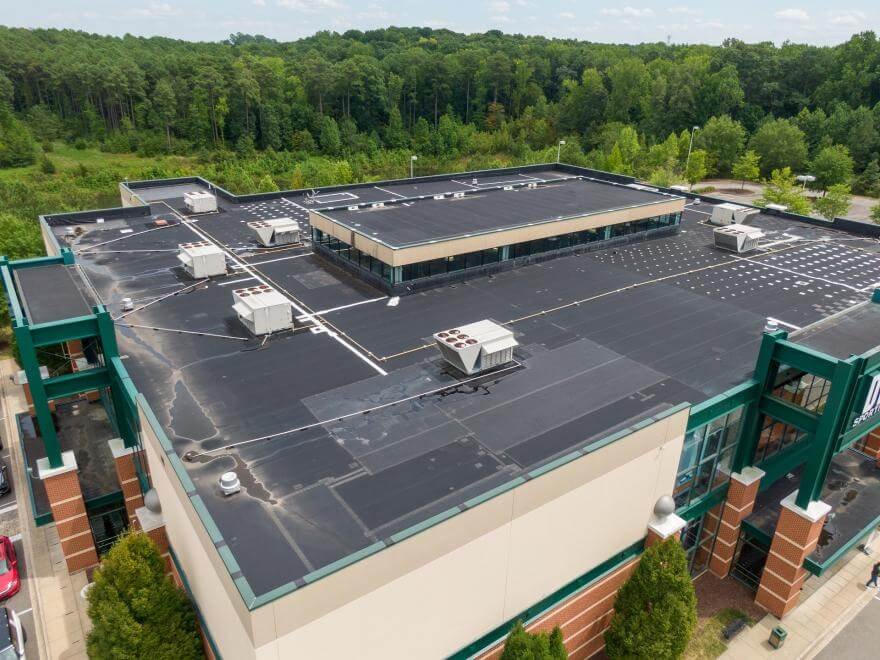
Here’s something most building owners in New York City discover too late: a commercial roof doesn’t fail all at once. It fails quietly, over months, through a slow seam separation, a small blister that grows after every rainfall, a drainage issue nobody caught until water reached the ceiling tiles.
By the time damage is visible inside, the structural repair cost is often five times what a timely inspection would have cost. That’s the reality of commercial roofing in one of the most weather-stressed urban environments in the United States.
What Makes Commercial Roofing in NYC Uniquely Demanding
Commercial roofing in New York City is not like roofing anywhere else. The city’s climate delivers everything — freeze-thaw cycles in winter, sustained heat and UV exposure in summer, heavy rainfall events throughout the year, and high wind loads in exposed borough locations.
Beyond weather, NYC buildings face rooftop mechanical loads: HVAC units, water tanks, elevator equipment, and ventilation systems that create penetration points and stress concentrations on the membrane. Add the density of surrounding structures creating thermal trapping, and you have a roofing environment that demands materials and installation expertise well above standard commercial practice elsewhere.
That’s why working with a contractor who specializes in New York conditions — not just general roofing — is the difference between a roof that lasts 15 years and one that starts leaking in three.
The Most Common Commercial Roofing Systems in New York
Flat and low-slope roofs dominate commercial architecture across Manhattan, Brooklyn, Queens, the Bronx, and Staten Island. The most widely installed roofing systems include:
TPO (Thermoplastic Polyolefin): A single-ply membrane valued for its heat-reflective white surface, energy efficiency, and resistance to UV, chemicals, and punctures. Ideal for NYC buildings managing rooftop cooling loads.
EPDM (Ethylene Propylene Diene Monomer): A rubber membrane with exceptional durability in extreme temperature swings. EPDM is one of the most proven low-slope solutions in the Northeast market.
Modified Bitumen: A torch-applied or cold-applied system offering outstanding waterproofing performance and flexibility, particularly suited for older commercial buildings in the outer boroughs.
PVC Roofing: A durable, weld-seamed membrane that performs well around rooftop penetrations and chemical exposure environments such as restaurants or industrial facilities.
Each system has a lifespan, a maintenance profile, and a cost-per-square-foot range. Choosing the right one requires a site assessment, not a guess.
Critical Warning Signs Your Commercial Roof Needs Immediate Attention
Routine visual checks save money. Watch for these high-priority indicators:
- Ponding water standing 48 hours or more after rainfall — a sign of drainage failure and membrane stress
- Blistering or bubbling on the surface, indicating trapped moisture or adhesion breakdown
- Cracked or open seams and flashing separations at parapet walls, curbs, or penetrations
- Interior water stains or ceiling discoloration — always a lagging indicator of active infiltration
- Sagging or soft spots when walking the roof, which signals deck deterioration beneath the membrane
If you’re seeing two or more of these, your roof is past the preventive stage. You need an inspection and a professional repair assessment immediately.
👉 Schedule a free commercial roof inspection with Avenue Roofing NYC — we serve all five boroughs.
Commercial Roof Waterproofing: The NYC Standard You Can’t Skip
Waterproofing is the backbone of any commercial roofing system in New York. With the volume of rainfall, snowmelt, and freeze-thaw stress the city produces annually, a flat roof without a properly applied waterproof membrane is a liability, not an asset.
Applied waterproofing systems — including elastomeric coatings, liquid-applied membranes, and torch-applied modified bitumen — create a seamless barrier that extends roof life by 10 to 15 years when applied correctly over a sound substrate.
At Avenue Roofing NYC, our commercial roofing waterproofing service is engineered specifically for New York’s variable climate. We assess the existing membrane condition, address substrate issues first, and apply waterproofing systems rated for the specific exposure conditions of your building.
According to the National Roofing Contractors Association (NRCA), proactive waterproofing and maintenance programs reduce total roof lifecycle costs by up to 50% compared to reactive repair-only approaches. (nrca.net)
How to Choose a Commercial Roofing Contractor in NYC
Not every contractor with a license is qualified for commercial work. When vetting a commercial roofing partner in New York, confirm:
- NYC-specific licensing and insurance — including general liability and workers’ compensation appropriate for commercial building scale
- Experience with your roof system — TPO, EPDM, modified bitumen, and built-up roofing each require specialized skills
- References from commercial clients — not just residential, and ideally within your building type (retail, office, industrial, multi-family)
- Written warranty terms — covering both materials and workmanship, clearly defining exclusions
- Emergency response capability — because storm damage at 2 a.m. on a commercial property can’t wait until Monday morning
Avenue Roofing NYC serves businesses across Manhattan, Brooklyn, Queens, the Bronx, and Staten Island with commercial roofing installations, repairs, and maintenance programs built for New York’s operational realities. View our full residential and commercial roofing services.
What a Professional Commercial Roof Inspection Covers
A professional roof inspection for a commercial property goes well beyond a visual scan. A thorough assessment includes:
- Membrane integrity evaluation — surface condition, seam adhesion, blister mapping
- Flashing and counterflashing inspection at all penetrations, edges, and parapet walls
- Drainage system review — scupper condition, drain outlet clearance, slope analysis
- Substrate assessment — deck condition and evidence of trapped moisture via infrared thermal scanning
- Mechanical penetration survey — conditions around HVAC curbs, pipe boots, and skylight frames
- Documentation and repair priority report — ranked by urgency and cost
Industry guidance from the Building Owners and Managers Association (BOMA) recommends biannual roof inspections for commercial properties in Northern urban climates — once in spring after freeze-thaw season and once in fall before winter load begins. (boma.org)
The U.S. Department of Energy also notes that cool roofing systems like TPO and reflective coatings can reduce cooling energy costs by 10–30% in commercial buildings, making roof material selection a direct operational cost decision, not just a structural one. (energy.gov)
Ready to Protect Your NYC Commercial Property?
Your roof is one of the highest-value assets on your building. Deferred maintenance compounds cost. Emergency repairs always cost more than planned ones. And in New York City, a building with a failing roof is a liability that affects tenants, insurers, and property valuation simultaneously.
Avenue Roofing NYC provides expert commercial roofing installation, repair, waterproofing, and inspection services across all five boroughs. Our team works with your timeline, building requirements, and budget to deliver roofing solutions built for New York.
📞 Call us at +1 (234) 567-8912 📧 info@avenueroofingnyc.com 👉 Request your free commercial roofing estimate today
FAQs About Commercial Roofing in New York City
What is the average cost of commercial roofing in NYC? Commercial roof replacement in New York City typically ranges from $6 to $15 per square foot depending on roof size, material type, accessibility, and existing substrate condition.
How long does a commercial roof last in New York? Properly installed TPO and EPDM systems last 20–30 years with regular maintenance. Modified bitumen systems average 15–20 years. Without maintenance, lifespans drop significantly in NYC’s harsh climate.
Do I need a permit for commercial roofing work in NYC? Yes. The NYC Department of Buildings requires permits for roof replacements and significant repairs on commercial properties. A licensed contractor handles this process as part of the project scope.
Can commercial roof repairs be done in winter in New York? Yes, with the right materials. Cold-applied systems and certain single-ply repairs can be completed in winter. However, extreme temperatures can affect adhesion and curing times — experienced NYC contractors plan accordingly.
What’s the difference between commercial roof repair and replacement? Repair addresses localized damage — failed seams, cracked flashing, isolated leaks. Replacement is warranted when more than 25–30% of the roof surface is compromised, or when the membrane has reached end of serviceable life.
Related Reading: